The Frida Baby Triple-Angle Toothhugger Toddler Toothbrush is designed to make early brushing practice more manageable for toddlers and their caregivers.
This Frida Baby Triple-Angle Toothhugger Toddler Toothbrush review looks at its three-sided head, soft rounded bristles, and fading-bristle replacement cue.
Frida Baby Toothhugger Review Summary
The quick verdict
12,000+ ratings
Read Amazon ReviewsFrida Baby Triple-Angle Toothhugger Toddler Toothbrush
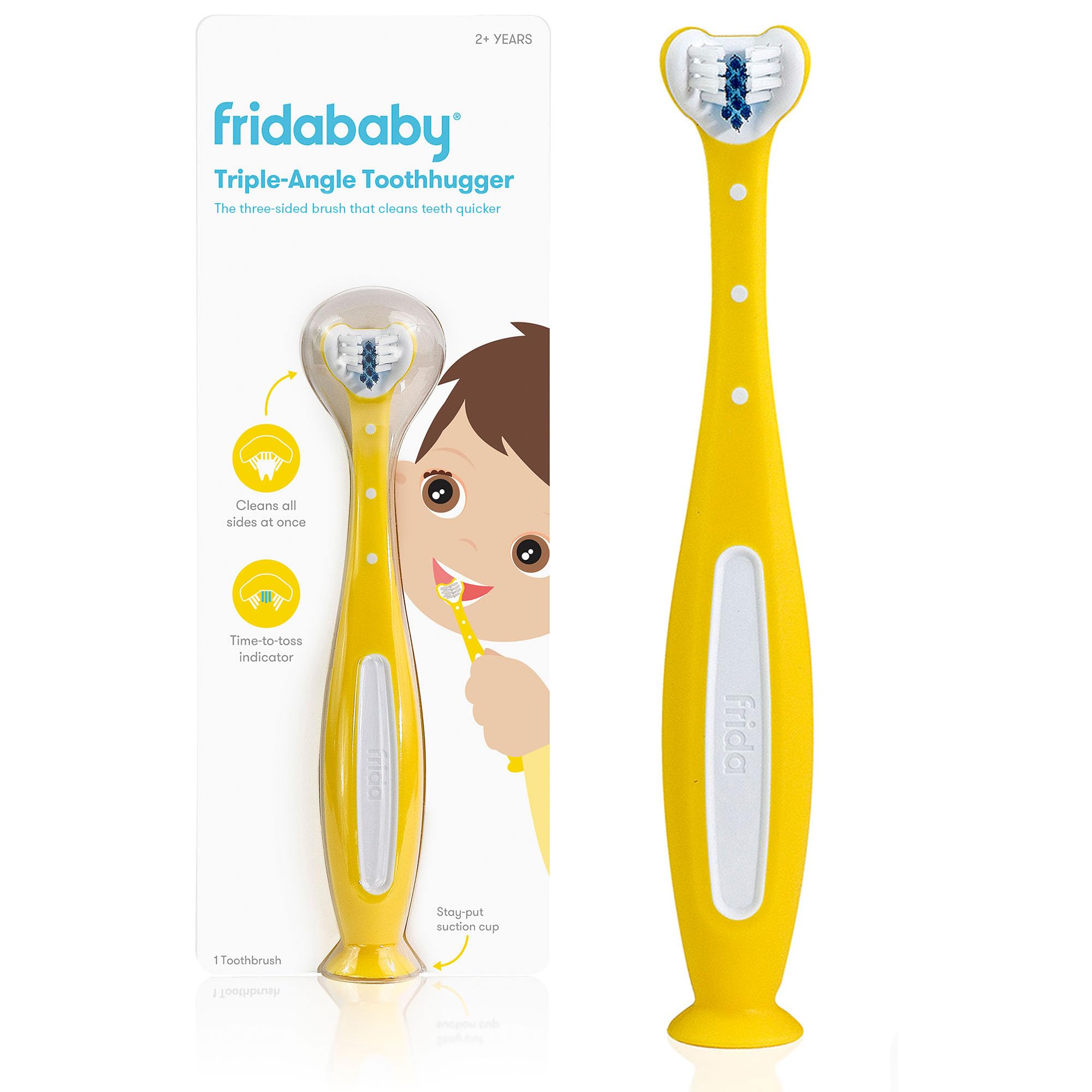
A training brush for toddlers ages two and up, with a three-sided head, soft bristles, and a color-fade replacement cue.
- Three-sided brush head is designed to clean all sides of a tooth at once.
- Blue bristles fade to white as a time-to-replace indicator.
- Soft, rounded bristles are intended to be gentle on teeth and gums.
- Designed for toddlers ages two and older.

Pros
- Distinctive head design targets multiple tooth surfaces in one placement.
- Soft, rounded bristles suit a gentle early-brushing approach.
Consider before buying
- The brushing routine still calls for adult help; it is not presented as a fully independent solution.
- The unusual three-sided head may take some getting used to for a child or caregiver.
Read the full review summary
Its defining feature is a brush head shaped to clean all sides of a tooth at once.
That design may help caregivers move through brushing with fewer repeated passes, while the soft, rounded bristles are intended for gentle contact with young teeth and gums.
The brush is for children age two and older, and the product description emphasizes practicing brushing with adult help.
The Toothhugger is best considered as a supervised training brush, rather than a way to hand off the entire routine to a toddler. Blue bristles that fade to white provide a visible reminder to replace the brush.
Families choosing it should be comfortable with the distinctive head shape and should still guide brushing, since the product is presented as a tool for learning proper technique with help.
The buying factors
Frida Baby Toothhugger Scorecard
Editorial scores reflect listed features and buyer fit; they are not laboratory measurements or customer ratings.
Toddler training fit
Designed for children two and older, with practice and caregiver help built into its intended use.
Tooth coverage design
The three-sided head is intended to contact all sides of a tooth at once.
Bristle gentleness
Soft, rounded bristles are designed for gentle brushing around teeth and gums.
Replacement cue
The blue-to-white bristle fade offers a simple visual prompt to consider a replacement.
Independent brushing support
It is framed as a practice brush used with adult help, so caregivers remain part of the routine.
Routine simplicity
The all-sides head may simplify how a caregiver approaches each tooth, though children still need guidance.
Key Features and Specifications of Frida Baby Toothhugger
- Three-sided brush head is designed to clean all sides of a tooth at once.
- Blue bristles fade to white as a time-to-replace indicator.
- Soft, rounded bristles are intended to be gentle on teeth and gums.
- Designed for toddlers ages two and older.
- Supports brushing practice with caregiver help.
Pros and Cons of Frida Baby Toothhugger
Pros
- Distinctive head design targets multiple tooth surfaces in one placement.
- Soft, rounded bristles suit a gentle early-brushing approach.
- Color-fade bristles give caregivers a visible replacement reminder.
- The age guidance and supervised practice purpose are clearly defined.
Consider before buying
- The brushing routine still calls for adult help; it is not presented as a fully independent solution.
- The unusual three-sided head may take some getting used to for a child or caregiver.
- The color change is a cue to replace the brush, so caregivers still need to notice and act on it.
Who Should Buy Frida Baby Toothhugger?
Good fit
Consider it if your child is at least two and you want a brush specifically designed around guided practice.
Its three-sided head gives the routine a different structure from a conventional brush head, while the soft rounded bristles keep the focus on gentle contact.
It may also suit caregivers who appreciate a visible reminder for replacement.
The fading blue bristles offer an easy-to-check cue, and the training focus makes sense for a family that plans to supervise brushing and help their child work on technique.
Who should skip it
Skip it if you need a brush for a child younger than two, since the stated age range begins at two.
It is also a poor fit if your goal is to leave the child entirely in charge of brushing; the design is described as a way to practice with caregiver help.
If your child resists the shape of the head or prefers a familiar brush, check their comfort with the design before making it the everyday choice.
The product information does not establish that every toddler will find its shape intuitive.
How the Frida Baby Toothhugger Fits a Toddler Brushing Routine
A head designed around tooth surfaces
The triple-angle head is the central reason to consider this brush. Its stated purpose is to clean all sides of a tooth at once, which may give a caregiver a clear placement cue while working around the mouth.
The design is a brushing aid, not a reason to rush: a child may still need help positioning the head and moving it from tooth to tooth.
Practice remains part of the job
The brush is positioned as a learning tool for toddlers, with adult help.
That distinction matters when choosing a first or training brush: the product can be part of building a routine, but caregivers should expect to guide the session rather than assume the head handles the whole task automatically.
Soft bristles and a visible replacement signal
Soft, rounded bristles are meant to be gentle on young teeth and gums.
The blue bristles fading to white add a separate practical feature by making replacement timing easier to notice; the change is best treated as a prompt for the caregiver to check the brush, not as a measure of brushing quality.
Check how the shape works for your child
A three-sided head differs from the usual single-sided profile, so a toddler may need time to become comfortable with it.
Pay attention to whether the child tolerates the head and whether you can guide it into place without making brushing more difficult.
The strongest fit is a family that sees the shape as useful for supervised practice and is willing to help the child adjust.
Alternatives to Frida Baby Toothhugger
No alternative model is recommended here. Compare the head design and features that matter to your routine before choosing another option.
Is Frida Baby Toothhugger Worth It?
The Frida Baby Triple-Angle Toothhugger Toddler Toothbrush is worth considering for supervised brushing practice with children ages two and up.
Its all-sides head, soft rounded bristles, and fading replacement cue make it a purpose-built option for caregivers who want a structured training brush.
Choose it if the three-sided shape seems workable for your child and you plan to stay involved in brushing. Families seeking a completely independent routine or a brush for a younger toddler should look for a different fit.
Your review at a glance
12,000+ ratings
Read Amazon ReviewsFrida Baby Triple-Angle Toothhugger Toddler Toothbrush
A training brush for toddlers ages two and up, with a three-sided head, soft bristles, and a color-fade replacement cue.
- Three-sided brush head is designed to clean all sides of a tooth at once.
- Blue bristles fade to white as a time-to-replace indicator.
- Soft, rounded bristles are intended to be gentle on teeth and gums.
- Designed for toddlers ages two and older.